 OfficeSwap
Return-to-Office Policies That Actually Fill the Office

Plenty of organizations have written a return-to-office policy. Fewer have an office people want to return to. The pattern is familiar: a memo sets three days a week, attendance spikes for a month, and then it drifts back, because people came in, couldn't find a quiet room, sat on video calls all day, and wondered why they'd made the commute.
A policy that fills the office isn't mostly about rules. It's about making the days in the office better than the days at home. Here's what tends to work.
1. Start with why people should come in
"Because the policy says so" doesn't survive the first rainy Tuesday. Before you set a number of days, write down what the office is for at your organization. For most teams it's some mix of:
- Working with the people you need, in the same room, on the same day.
- Learning by being near more experienced colleagues, which matters most for juniors and new hires.
- Focused, confidential work in a room with a door, for people whose home setup isn't good for it.
- Meeting clients somewhere that looks the part.
Every rule that follows should serve one of those. If a rule doesn't, it's probably the kind that gets quietly ignored.
2. Guarantee somewhere good to sit
The fastest way to kill a return-to-office push is to bring people in and give them nowhere to work. If someone without an office arrives and spends the morning hunting for a free room, they'll stay home next week, and they'll tell their colleagues why.
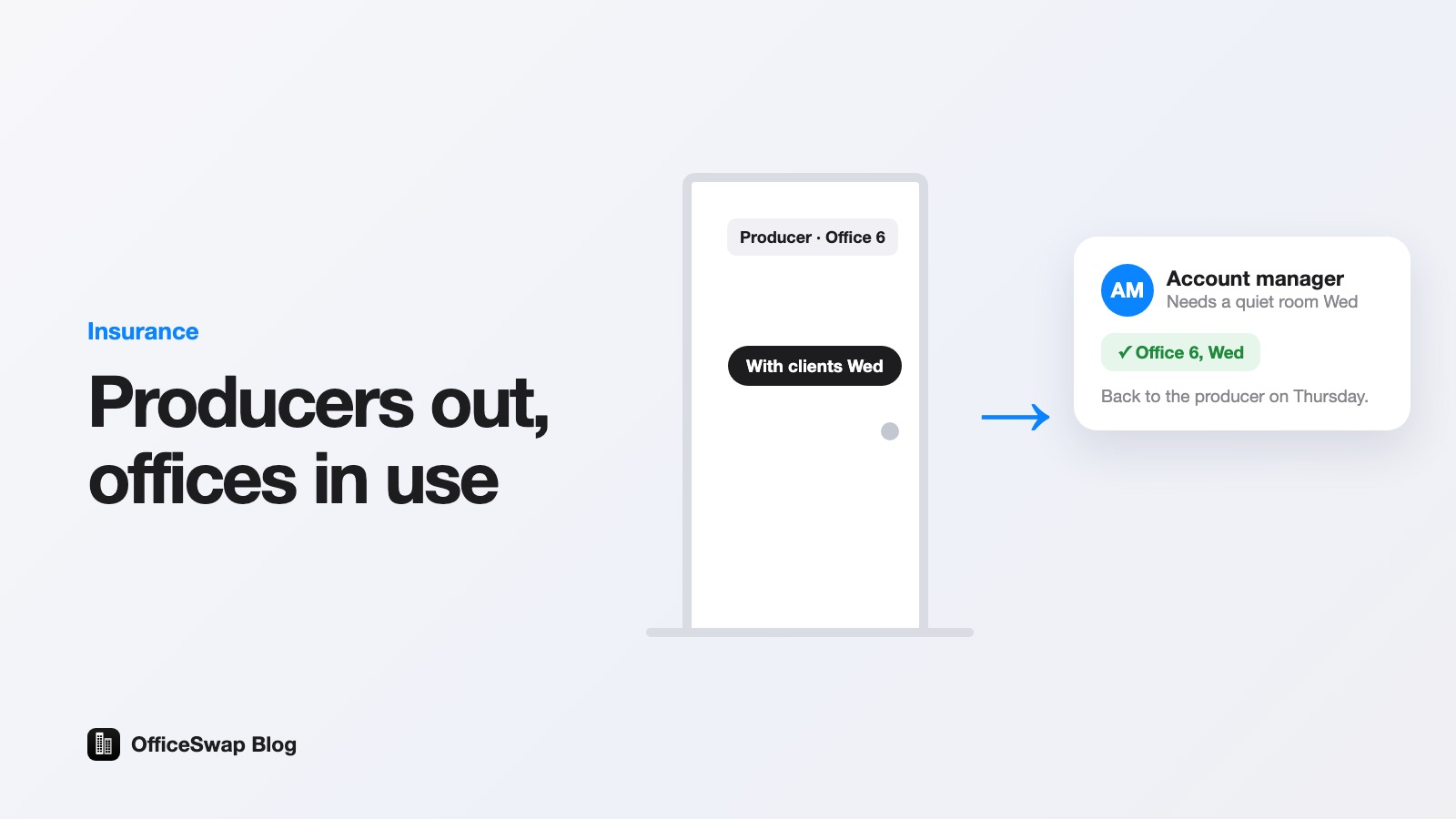
You probably already have the space. On any given day, some office holders are out: on vacation, at a client, in court, at a conference, working from home. Their offices are real rooms with doors, sitting empty. Office sharing lets office holders offer those days, so colleagues coming in can request a room and know where they're sitting before they leave home.
The detail that makes or breaks this: office holders keep their offices. They only share the days they choose. Nobody is being asked to give anything up.
3. Coordinate days, not just numbers
"Three days a week" gives you an office that's busy on Tuesday, Wednesday and Thursday and empty on Monday and Friday, with nobody guaranteed to overlap with the people they need. Better options:
- Anchor days for the whole organization, for meetings, training and social time.
- Team days, chosen by each team, so colleagues who work together are in together.
- Flexible days on top, for whatever each person's work needs.
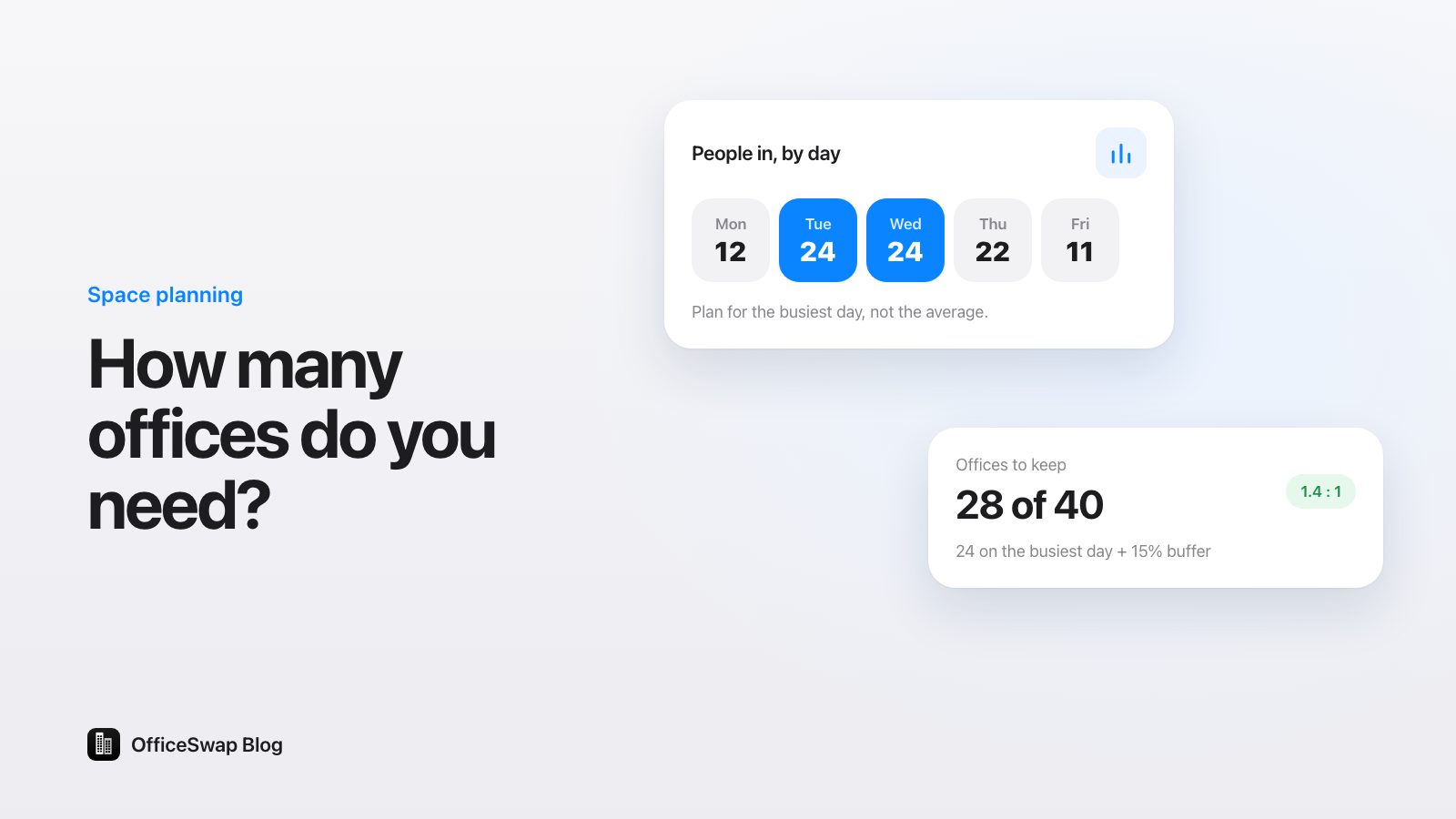
Spreading team days across the week also evens out the load on the building, so you don't need space for everyone on the same Tuesday. Our guide to hybrid office schedules goes deeper on planning the week.
4. Make it visible who's coming in
People are far more likely to come in if they know who else will be there. A shared schedule does more for attendance than any reminder email: "Oh, Priya's in on Thursday, I'll come in and we can finish the deck."
In OfficeSwap, the Board shows who's in, who's visiting and what's open for any day, and the floor plan view shows where everyone is sitting. Teammates in on the same days are placed in offices near each other where possible. If your team lives in Slack or Microsoft Teams, connect a channel and it gets a summary of who's in every weekday at 8 AM.
5. Be fair about who gets the good rooms
Nothing sours a return-to-office push faster than a sense that the same few people always get the quiet offices. Pick a rule, write it down and stick to it. First come, first served is the easiest to defend: the earliest request gets the next open office. If a few early birds are booking everything weeks ahead, cap it with booking rules: a limit on days per week, and on how far ahead people can ask.
We explained the reasoning behind each rule in how OfficeSwap keeps every office fair, and how to apply it to junior staff in running a fair office rotation.
6. Remove the small frictions
Lots of small annoyances add up to "it's easier at home." Walk the route yourself and fix what you can:
- Know where you're sitting before you arrive. A confirmed office the day before beats wandering the floor at 9 AM.
- Leave notes. Office holders can add a note to their offer, like where the monitor cable is or who has the key.
- Make cancelling painless. Plans change. If cancelling a booking takes one swipe, people do it, and the room goes to the next person waiting.
- Tell people about closures. Mark holidays and building closures as closed days, and post an announcement when the fourth floor is being painted.
7. Measure use, not just attendance
Badge data tells you how many people came through the door. It doesn't tell you whether they found somewhere to work, or how many private offices sat dark that day. Those are the numbers that tell you if the policy is working.
Watch two things. First, requests filled: the share of days people asked for an office and got one. If that's low, people are coming in and being disappointed, and attendance will drop. Second, empty desk-days: offices offered that nobody used. If that's high, you have more space than demand, which is a sign the "why" isn't landing yet. In OfficeSwap, both are in Insights, alongside the busiest day and each person's days in the office. More in Office Analytics for Admins.
8. Review after a quarter, then adjust
Treat your first policy as a draft. After three months, look at the numbers and ask people what's working. Common adjustments:
- Moving an anchor day that clashes with client travel.
- Adding guest desks where demand outstrips offers.
- Loosening or tightening booking rules.
- Asking office holders to offer their regular remote days, not just vacations.
Share what you changed and why. People are more willing to follow a policy that visibly listens.
A short version for your policy document
- We come in to work together, learn from each other, focus and meet clients.
- Every team picks its team days. The whole organization meets on anchor days.
- Office holders offer their office on days they're out. Everyone else requests the days they'll be in.
- Offices are assigned first come, first served, within the booking rules.
- Cancel as soon as plans change, so the room goes to someone else.
- Treat a borrowed office the way you'd want yours treated (see our etiquette guide).
Want to see how a shared office schedule looks in practice? Open officeswap.co/app and enter the code DEMO.
From the OfficeSwap blog: officeswap.co/blog/return-to-office-policy/